Aviation Policy in a Global Crisis: Why the Ministry Re-evaluated the 60% Free Seat Selection Rule
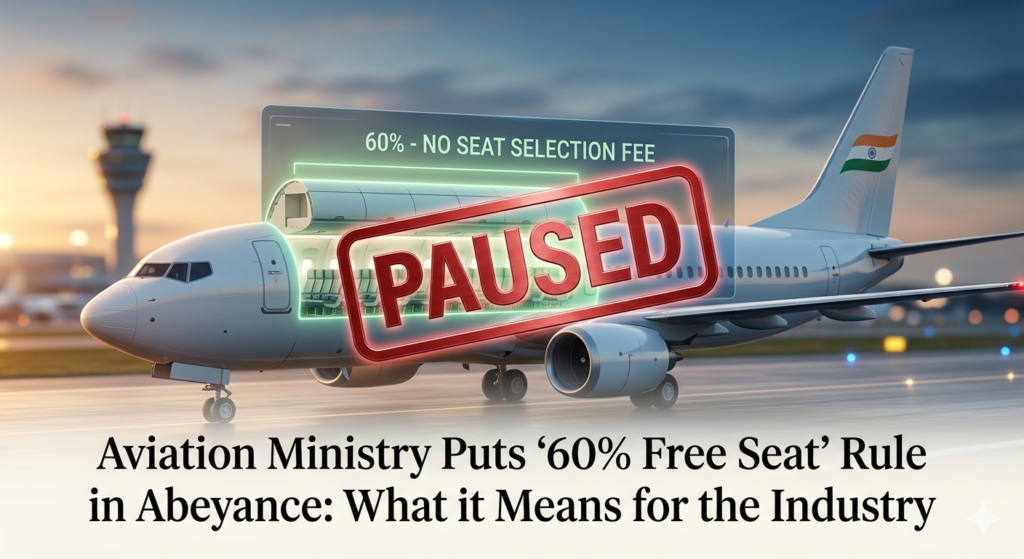
The Ministry of Civil Aviation’s decision to put the “60% Free Seat selection” rule in abeyance comes at a time when the industry is facing a “Perfect Storm” of challenges. While the government originally intended this as a passenger-friendly move, three major factors have forced a re-examination:
1. The Energy Factor (The Oil Question) on 60% free seat selection rule
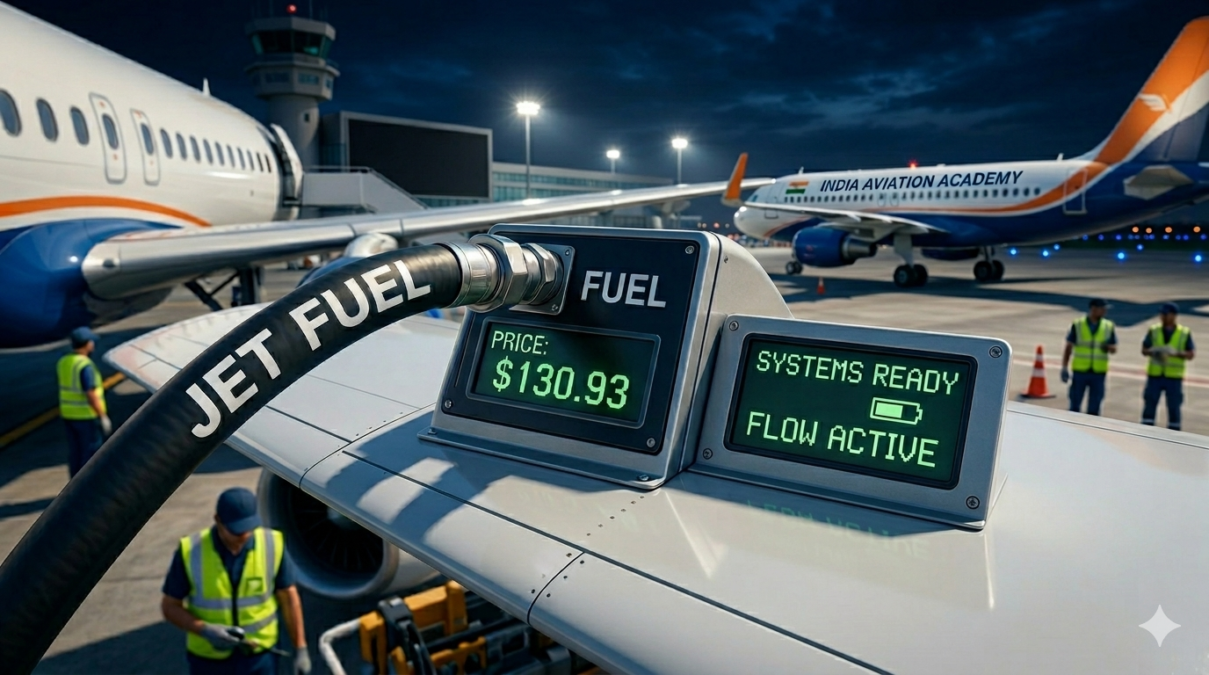
With global tensions in West Asia leading to significant volatility in oil prices, the cost of Aviation Turbine Fuel (ATF) in India has hit record levels (crossing ₹2 lakh/kl for international flights).
The Logic: To prevent a total spike in ticket prices, the government is helping airlines manage costs. Keeping “seat selection fees” active is one way to help airlines offset these massive fuel bills without raising the base fare for everyone.
2. The Legal & Regulatory Framework
The Federation of Indian Airlines (FIA) and Akasa Air raised important legal points. They cited a 2017 Delhi High Court ruling that recognizes seat selection as a “valid unbundled service.”
The Logic: In a deregulated market, the government usually allows airlines to decide their own “add-on” prices. Forcing a 60% free-seat selection mandate could be seen as going against the industry’s deregulated structure.
3. Operational Stability
The government has also stepped in to cap domestic ATF price hikes at 25%. This shows that the priority has shifted from “passenger perks” to “industry survival.” By rolling back the seat mandate while capping fuel prices, the Ministry is trying to keep the entire aviation ecosystem stable during a period of global uncertainty.
The suspension of the 60% free seat selection rule marks a significant moment in the balancing act between passenger affordability and industry survival. As the Ministry of Civil Aviation maneuvers through this ‘Perfect Storm,’ it is clear that operational stability has taken the captain’s seat. For now, the dream of a mandate-driven free-seat quota remains grounded, yielding to the harsh realities of global fuel volatility and the legal right of airlines to unbundle their services. In the high-stakes environment of Indian aviation, this policy shift ensures that while the cost of a specific view might remain, the industry itself continues to have the clearance it needs to stay airborne.