
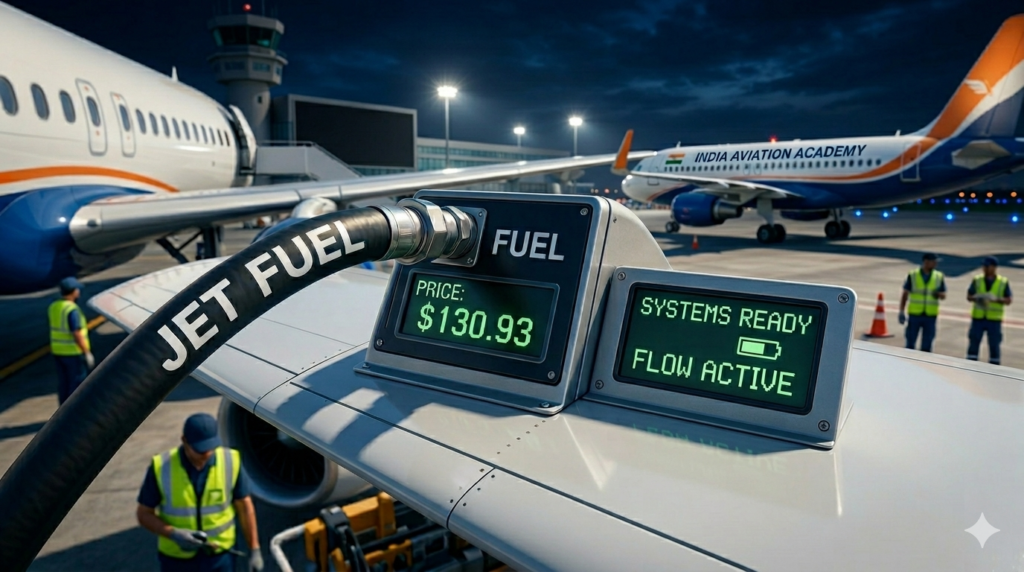
The Indian aviation landscape is on the verge of a historic structural shift. As global jet fuel prices hit record highs—with the Indian crude basket reaching $130.93 earlier this month—the Ministry of Civil Aviation has submitted a fresh proposal to bring Aviation Turbine Fuel (ATF) under the Goods and Services Tax (GST) framework.
For an industry where fuel accounts for nearly 40% of operational costs, this isn’t just a policy change; it is a vital move to stabilize the industry against volatile jet fuel prices and spark a massive boost for aspiring aviators.
Why This Matters for Future Pilots and Professionals
While the news focuses on tax reform, the real impact for students and professionals at academies like ours is long-term career stability. Here is how this reform trickles down to you:
- Countering High Jet Fuel Prices: By moving away from high, varying state VAT to a unified GST, airlines can claim Input Tax Credits. This significantly lowers the actual cost of fuel for the airline.
- More Aircraft, More Jobs: When airlines save hundreds of crores on fuel taxes, they reinvest in fleet expansion. More aircraft in the Indian skies directly translate to a higher demand for Commercial Pilots and Aviation Management professionals.
- A “Shock Absorber” for the Industry: Even when global jet fuel prices surge, GST inclusion provides a financial buffer. This stability encourages airlines to maintain their hiring cycles rather than freezing them during global oil crises.
The Road Ahead: The GST Council Meeting
The proposal is expected to be a top priority in the upcoming GST Council meeting. While states have historically been hesitant to give up VAT revenue, the current crisis has created a “consensus of necessity.” Leading states like Gujarat and Karnataka have already shown the way by voluntarily slashing VAT to support the sector.