Pilot Training in Philippines: 2026 Cost & Guide
Pilot Training in Philippines 2026 🇵🇭: Get your CPL for 50k-59k $. Complete guide on CAAP schools, eligibility (10+2), 12-month duration, and DGCA conversion.
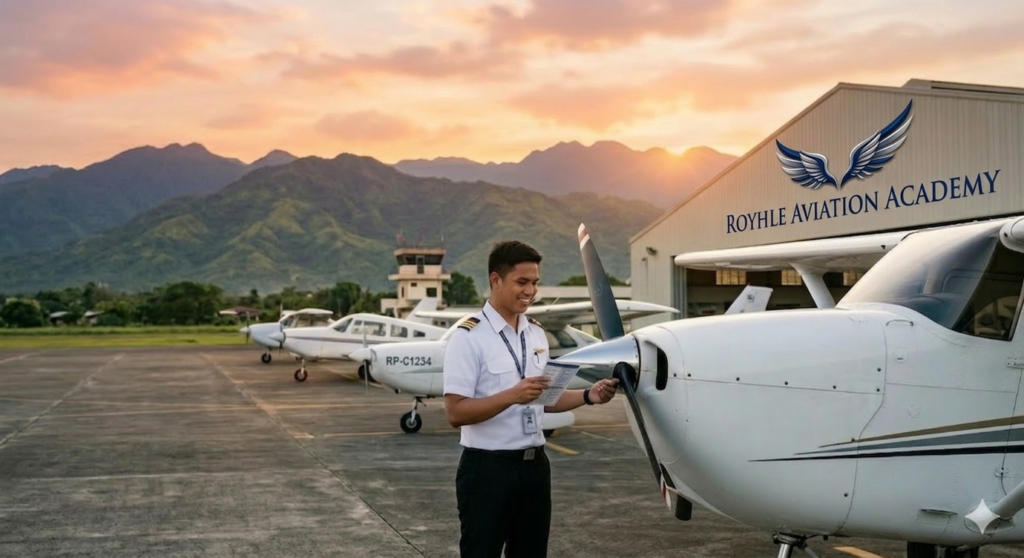
Have you heard about Pilot training in Philippines? Why did Philippines become the favourite destination of students pilot? There are many reasons why the Philippines is being a popular destination of pilot training, like having good weather, no language barrier, as majority of people speak in English, and the last reason which is the most important, is cost of pilot training is usually lower than in many other countries. But still if you are confused regarding the procedure of getting admission in the Philippines, you can read this blog to have a better understanding why Philippines is becoming a popular destination for CPL Training, let’s get to know the about Philippines in different aspect.
Pilot training in Philippines: A Geographic & Cultural Overview
The Philippines is made up of a chain of island, students will not fly over only flat ground, but will get an experience to fly over sea, and different types of land like Tropical Jungles or Mountainous Terrain, this makes your training far more enriching. Geographically, Philippines is divided into 3 parts.
- Luzon: This is the northern part of the Philippines where Metro Manila is located. It is the hub of flight schools, infrastructure, and connectivity. The majority of international students are based in this region
- Visayas: The most beautiful islands, like Iloilo and Cebu, lie here in the Visayas. This region is full of tourist activities and offers some of the best flying facilities for training.
- Mindanao: This is the southern part of the Philippines. most pilot training is concentrated in the Luzon and Visayas regions.
Religion– Philippines has a 90% Christian majority (mostly catholic), but the country is secular and welcoming to everyone. There are masjids, gurudwaras, and temples in most of the big cities like Manila, Cebu, etc.
Tourism- Philippines is known for famous white sand beaches of Boracay. it is a famous destination for global tourists. white sand feels like powder and has crystal-clear water. Similarly, there are more wonderful tourist destinations like Palawan and Bohol. One can explore diverse location during the weekend.
Advantages of Pilot training in Philippines
Below are some pointers which help you to talk about the advantages of pilot training in Philippines: –
Easy entry – when people say easy entry they usually mean by no tough entrance exam for Pilot training in Philippines, simple academic requirements, quick medical, high visa approval rate.
Low cost- affordability is a major advantage whether we talk about studying, training or living. It is 40-50% cheaper than Australia, US or any country of that standard. It means it is better for those students who want quality in their studies with lesser cost. in the metro city like manila, student can secure a furnished condominium in just 10-15k PHP in a month, for a single person, electricity bill may charge 2-3k php. low cost is important advantage of Pilot training in Philippines
Language- In Philippines almost everywhere communication language is English which helps students to build confidence in their English language.
Better weather conditions- In Philippines weather is usually stable as compared to other countries which is good for pilot training. As it will help to improve skills due to regular practice. batter weather helps to complete pilot training in Philippines very fast.
Shorter training durations- Usually most of the Philippines schools provide shorter training durations which helps to complete the training faster than expected.
Experienced instructor- The Philippines boasts experienced flight instructors who can offer high-quality training and valuable insights gained from their own flying careers so that students can get to know what the actual problems are while flying a plane.
Cultural exposure- Usually students personally notice about the culture of Philippines which helps to enhance their living and also helps them to get to know about different cultures.
Modern training Facilities- Many flight schools in the Philippines are equipped with modern training aircraft and advanced flight simulators, providing a comprehensive training experience.
Food- Philippines is one of the best tourist places, so you can find best regional restaurant. major city like manila, is populated by Indian medical students and Indian corporate employees, so monthly Indian food delivery service at home with reasonable price can be found easily, healthy and fresh food is one call away from your accommodation.
now, lets move further and get to know a important authority, civil aviation authority of the Philippines, its work same as DGCA in india.
Civil aviation authority of Philippines
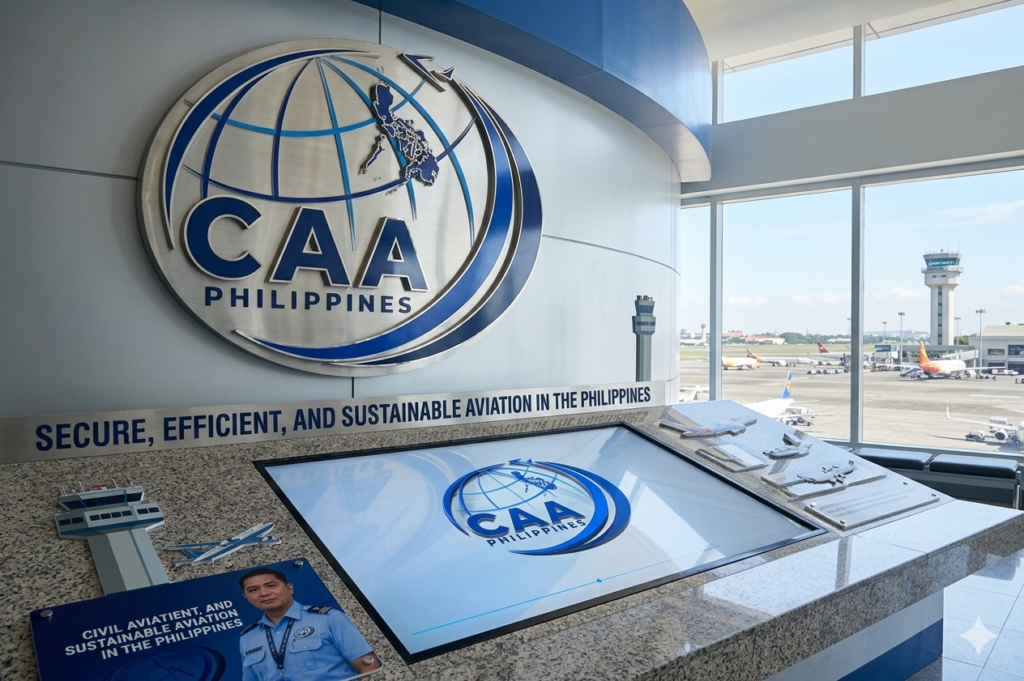
The Civil Aviation Authority of the Philippines is the national regulatory body of the commercial aviation sector in the Philippines. It is almost equivalent of DGCA in India. CAAP plays an important role in your CPL training. Medicals, ELP, aircrew theoretical and practical exams, license release, records, and verification—every process will be monitored and processed by CAAP. It is the primary regulatory body which ensures that training strictly follows ICAO guidelines.
Eligibility to start Pilot training in the Philippines (step wise process)
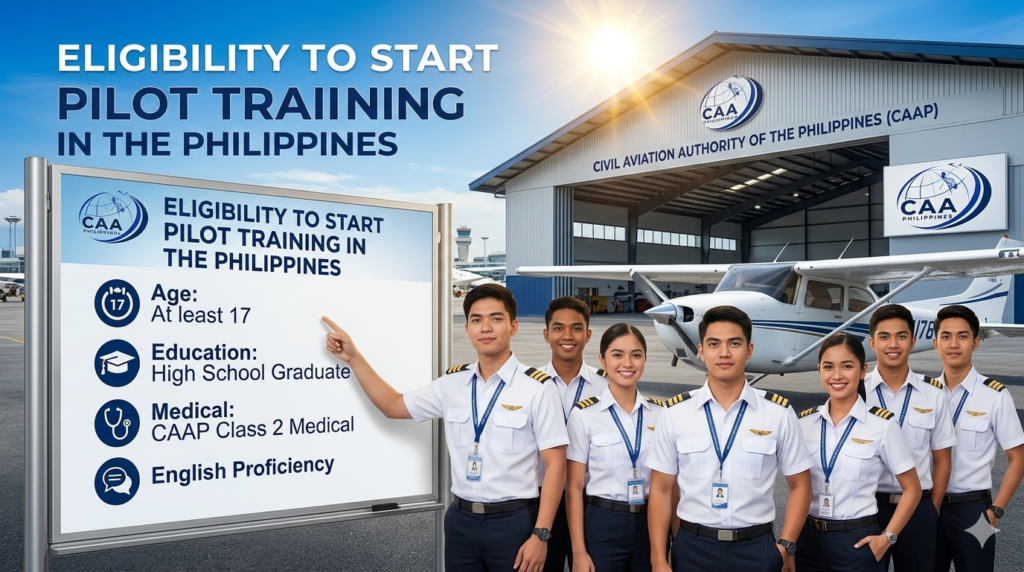
- Age of a candidate:- Age is a very important factor in the admission process. Many schools require proof of age to get admission in specific schools. Minimum age for pilot training in Philippines is 17 years and for commercial pilot license, 18 years old is mandatory requirements.
- Education:- Minimum education requirement is passing high school (class 12) with core subjects like maths and physics at the time of applying for Pilot training in Philippines.
- Completing class 1 and 2 of medical:- Before Investing anything for a Pilot training, it is important to complete class 1, and class 2 medical. but at least class 2 Medical is advisable for admission purposes.
- Select a pilot training school:- In Philippines there are many known pilot schools which make it very confusing to choose, therefore selecting a pilot training school becomes one of the most important tasks for getting admission. The reputation and track record of the flight school are vital factors..
- Documents required to apply for pilot training school:- The documents are 10th and 12th marksheets to verify that maths and physics are your core subject, passport as identity proof, passport size photographs for official records, medical certificate to check whether you have possess a valid DGCA Medical Assessment, and some undertaking forms. It will always be preferable to first contact the school for the document verification.
Process to get enrolled in the Philippines for pilot training
Primarily, candidate require to secure an official admission to CAAP approved flying club by paying desire first instalment of the package. There after, visa process may start.
Visa invitation-
At this stage, once you receive your Letter of Acceptance (LOA), in order to secure a visa for pilot training, apply at the Embassy of the Philippines, based on your region, if you are from north, east, west or south India.
CPL Process step by step-
- Students must pass two medical classes 1 and 2
- FRTOL or RT
- CPL ground classes
- Flying for SPL then PPL then 172 aircraft endorsement then CPL then multi and last Instrument Ratting.
Obtaining Indian License-
Upon the successful completion of CPL, Multi and IR, student will proceed to Indian license by completing India requirements and exam, once candidate fulfils the requirements, may submit documents for conversion, and wait for process to get Indian CPL license.
Reality of Cost of pilot training in Philippines
On average, Indian students spend between ₹50 Lakhs to ₹60 Lakhs for complete CPL training in the Philippines. This usually includes flying hours, instructor fees, accommodation, transportation, meals, visa costs, and study material.
Extra expenses include medical renewals, the purchase of a flight headset, uniform, local transport, and DGCA conversion costs later.
You should always keep some emergency cash, as aviation expenses rarely follow exact predictions.
Let’s break down the estimated monthly living expenses and the total projected costs for a typical 14–15 month training duration.
Total packages- in the Philippines, Students can secure an admission for between 50k USD to 59KUSD, it is depending on what the trainee pilot is looking for
based on specific requirements, Students can ask for custom pilot training packages, if student wants to add accommodation, transportation, ground class or not, total package cost may change based on services added. the final price may vary according to these personal preferences, but generally, students may complete CPL, MULTI and Instrument rating with Indian requirements in 50k USD to 59KUSD.
Living and food expenses- In a metropolitan city like Manila, student can rent a furnished luxury condominium for a cost of 12k-15k PHP in a decent locality. although electricity may cost 2k-3kphp for one person. Indian food may cost 5k-7k per month.
Monthly Living Expenses (in PHP)
| Expense Item | Minimum Monthly (PHP) | Maximum Monthly (PHP) |
| Condo Fee | 10,000 PHP | 15,000 PHP |
| Electricity | 2,000 PHP | 5,000 PHP |
| Food | 5,000 PHP | 7,000 PHP |
| Transportation | 3,000 PHP | 5,000 PHP |
| Total Monthly (PHP) | 20,000 PHP | 32,000 PHP |
Your total budget for the 15-month pilot training in Philippines, including both the flight school package and all living expenses, should range from 55,530$ to 66,039USD
Pilot training in Philippines, Infrastructure and Airspace Availability
Another important reason students prefer pilot training in Philippines, is the availability of training airspace and airport infrastructure. Many training bases operate from less crowded airports, allowing students to practice take-offs, landings, and navigation exercises without long waiting. This reduces air traffic blockages which improves learning efficiency and gives students more hands-on experience of flying exposure in each session.
Several training locations also provide access to controlled and uncontrolled airspace, helping students to gain practical experience in different operational environments. This helps to prepare students for airline operations later on.
The Important Part That Most Students Forget is DGCA Conversion
Completing a CPL abroad, does not automatically allow you to fly in India. To work with Indian airlines like IndiGo or Air India, your license should be converted through DGCA.
Conversion process includes passing theory exams, radio telephony clearance, medical validation, and many more. This phase must be cleared through patience and preparation.
After submission of the conversion application, it may take couple of month to receive the Indian CPL license .
once you receive the Indian license, you are eligible to apply and secure a job in Indian airline.
Frequent ask question about Pilot training in Philippines
What is the minimum age and educational requirement to start pilot training in the Philippines?
To begin pilot training in Philippines, a candidate must be at least 17 years old, though you must be 18 years old to hold a Commercial Pilot License (CPL). Educationally, you must have completed High School (Class 12) with core subjects in Maths and Physics.
How much does the total pilot training package cost, and what does it include?
Generally, a complete CPL, Multi-Engine, and Instrument Rating (IR) package costs between $50,000 and $59,000 USD (approximately ₹50 Lakhs to ₹60 Lakhs). This typically covers flying hours, instructor fees, accommodation, meals, visa costs, and study materials.
Is there a language barrier for Indian students training in the Philippines?
No. One of the main advantages of the Philippines is that there is no language barrier. English is the primary language of communication and instruction, which helps students build confidence and complete their training efficiently.
What are the estimated monthly living expenses for a student in a city like Manila?
A student can expect to spend between 20,000 PHP and 32,000 PHP per month. This includes roughly 10k–15k PHP for a furnished luxury condo, 2k–5k PHP for electricity, 5k–7k PHP for food (including Indian food options), and 3k–5k PHP for transportation.
Does a Philippines CPL allow me to fly immediately for Indian airlines like IndiGo or Air India?
No. A license earned abroad does not automatically allow you to fly in India. You must undergo the DGCA Conversion process, which includes passing theory exams, obtaining radio telephony (RT) clearance, and medical validation. Once the DGCA processes your application (which can take a couple of months), you will receive your Indian CPL.